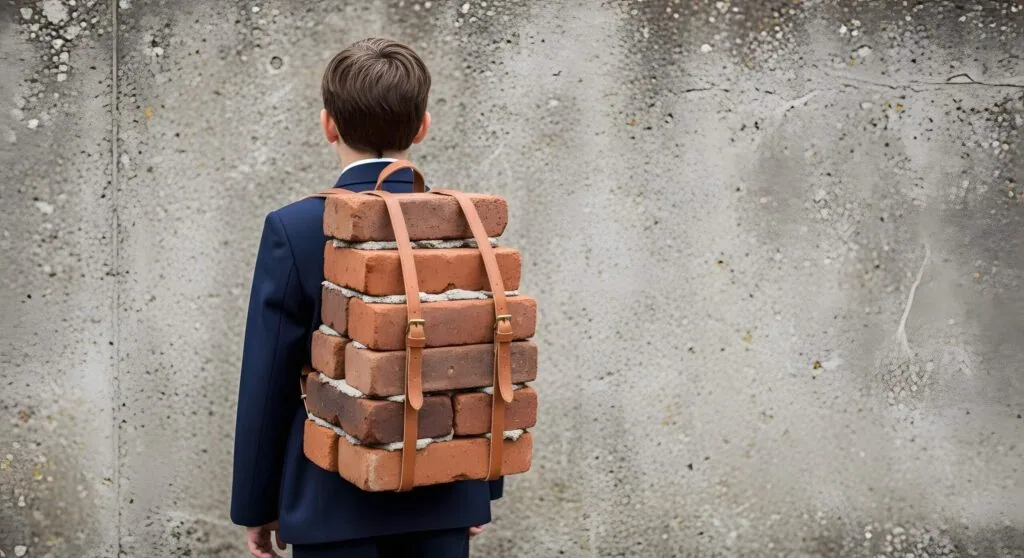
The School Year Posture Problem
Backpacks and Desk Work
The school year brings excitement, routine, and—whether we realize it or not—significant postural stress on children’s developing spines. Between heavy backpacks, hours hunched over desks, and the repetitive strain of sitting in classroom chairs, your child’s body is working harder than you might think. Over nine months, these habits accumulate, and by the time spring arrives, many parents notice their kids complaining of neck or back discomfort, or they observe visible slouching that wasn’t there in August.
The good news? This is preventable and manageable—but it requires awareness and action now.
The Backpack Burden
A common guideline suggests backpacks should weigh no more than 10–15% of your child’s body weight. A 70-pound fourth-grader, then, should carry roughly 7–10 pounds maximum. In reality, many students carry 15–25 pounds or more, especially on heavy textbook days. When a backpack pulls weight unevenly—or when a child adjusts their posture to compensate for the load—the spine experiences asymmetrical stress. Over months, this can lead to muscle imbalances, forward head posture, and even early spinal misalignment.
Practical backpack solutions:
- Use both shoulder straps, not one. Carrying a backpack on one shoulder creates rotational stress.
- Adjust straps so the pack sits high on the back, with the bottom near the waist. Loose straps force kids to lean forward.
- Consider a wheeled backpack or locker organizer to reduce daily load.
- Audit contents weekly—textbooks left at home or in lockers make a real difference.
The Classroom Desk Challenge
School desks are rarely designed for optimal ergonomics. Many are too high, too low, or paired with chairs that don’t adjust to fit a growing child. When a desk doesn’t match your child’s proportions, they naturally compensate: rounding the shoulders, craning the neck toward the page or screen, or twisting the torso. Hour after hour, day after day, this postural compromise becomes habitual, tightening muscles and stressing spinal joints.
Add screen time—whether computer work or looking down at a tablet—and the strain multiplies. The research is clear: prolonged forward head posture in children correlates with increased neck and upper back pain over time.
At-home support for desk posture:
- Set up a homework station where your child’s chair allows feet to rest flat on the floor and elbows to rest at 90 degrees.
- Position screens at eye level; if using a laptop, add an external keyboard and mouse.
- Encourage breaks every 20–30 minutes. A quick walk or stretch interrupts the postural cycle.
- Model good posture yourself—kids learn what they see.
Cumulative Effects Over the School Year
One day of poor posture doesn’t cause lasting damage. But nine months of daily stress, backpack strain, desk work, and classroom sitting adds up. Muscles fatigue and tighten. Spinal joints develop irritation. Nerve pathways can be affected, sometimes leading to headaches or radiating discomfort. Early intervention during or after the school year prevents these minor issues from becoming major problems in adolescence or adulthood.
Regular chiropractic check-ups during the school year serve a preventive role. A chiropractor can identify postural imbalances, correct spinal misalignments caused by poor ergonomics, and teach your child body-awareness techniques—how to sit properly, how to carry a backpack, how to stretch between classes. For many children, even one or two visits per school year can catch and address developing issues before they become chronic.
Pediatric chiropractic care is gentle, safe, and focuses on supporting your child’s natural growth and development. It’s an investment in lifelong spinal health.
The school year doesn’t have to be a season of postural compromise. By addressing backpack habits, optimizing homework spaces, and adding periodic chiropractic care to your wellness routine, you help your child develop healthy spinal habits that serve them well into adulthood. Start now—don’t wait until pain becomes a problem.
Ready to talk? Call 713-862-2440 or visit our contact page.