Jet Lag and Your Spine
How Holiday Travel Disrupts Your Alignment
Holiday travel season brings excitement, family reunions, and long flights — but it also brings jet lag, postural strain, and spinal misalignment. When you cross time zones, sit cramped in airplane seats, and disrupt your sleep schedule, your body pays a price. Your spine and nervous system are especially vulnerable during travel, and understanding how jet lag affects alignment can help you protect your health during the busiest travel season.
How Jet Lag Stresses Your Spine
Jet lag isn’t just about feeling tired. When you cross multiple time zones, your circadian rhythm — the internal clock that regulates sleep, digestion, and muscle tone — falls out of sync with your environment. This disruption affects posture and spinal health in several ways.
During jet lag, your muscles become fatigued and less responsive, making it harder to maintain good posture. You’re more likely to slouch, crane your neck forward, or sit unevenly in your seat. Your sleep quality suffers, which delays the body’s natural repair processes — the time when your discs rehydrate and your muscles recover from the day’s stress. Poor sleep also increases inflammation and pain sensitivity, making existing spinal tension feel worse.
Add to this the physical demands of air travel: sitting in a confined space for hours, hunching over a phone or laptop, lifting heavy luggage, and navigating unfamiliar airports. All of this compounds vertebral misalignment and muscular tension.
Preventive Care Before You Travel
The best time to prepare your spine for holiday travel is before you leave Houston. A chiropractic adjustment in the week or two before your trip helps ensure your vertebrae are properly aligned and your nervous system is functioning optimally. When your spine is aligned, your body handles stress — including travel stress — more effectively.
Dr. Holmes recommends a pre-travel adjustment to establish a baseline of spinal health. This reduces the risk of arriving at your destination already out of alignment and helps you start your trip with better posture and mobility.
Maintaining Alignment During Long Flights
Once you’re airborne, small habits make a big difference. First, get up and walk every hour or two. Sitting for extended periods locks your spine in one position and tightens your hip flexors, which pulls your lower back forward and flattens your lumbar curve.
When you’re seated, adjust your seat to support the natural curve of your spine. Use a small pillow or rolled blanket behind your lower back. Keep your head over your shoulders, not jutting forward — a common mistake when looking at screens. Your feet should rest flat on the floor or footrest, with your knees at a 90-degree angle.
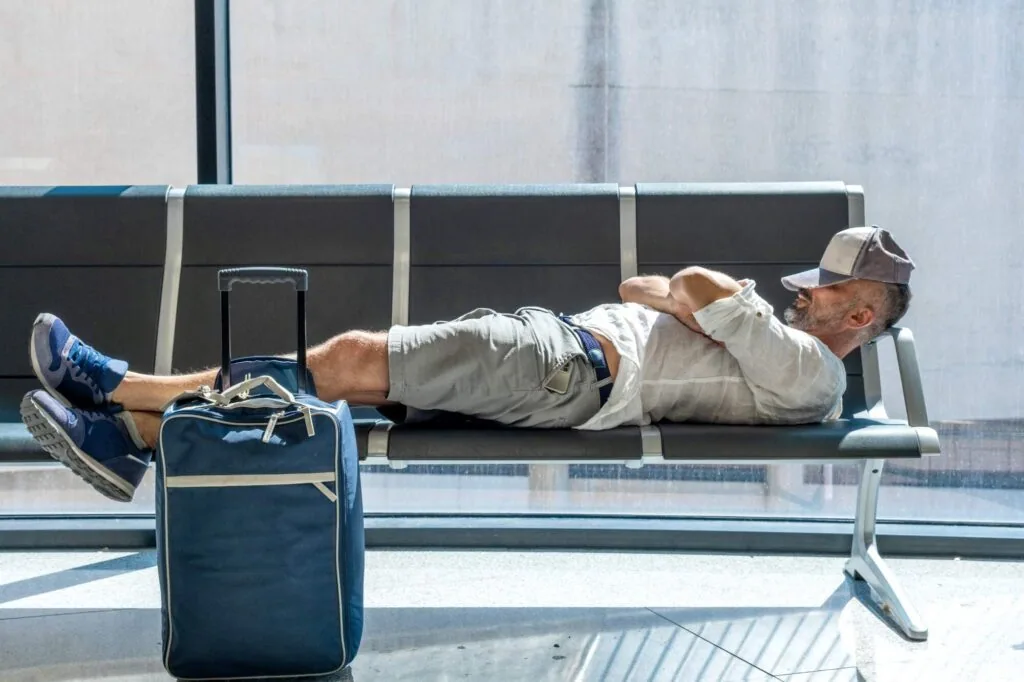
Avoid sleeping in awkward positions. If you do rest, use a neck pillow to keep your cervical spine neutral. Sleeping with your head tilted to one side or cradled against the window can create a painful stiff neck and misalign your upper vertebrae.
Managing Time-Zone Changes
To minimize jet lag’s impact on your spine, help your body adjust to the new time zone gradually. If you’re traveling east (losing time), go to bed earlier a few days before you leave. If you’re traveling west (gaining time), stay up later. Exposure to morning sunlight in your new location helps reset your circadian rhythm faster.
Stay hydrated during and after your flight — dehydration stiffens muscles and discs. Avoid heavy meals and alcohol, which can interfere with sleep quality and increase inflammation.
Care After You Return
Schedule a post-travel adjustment a few days after returning to Houston, especially if your trip was long or involved multiple time zones. This appointment helps realign your spine after days of travel stress and addresses any new misalignments before they develop into chronic problems. Dr. Holmes can also assess your posture during travel and give you personalized tips for your next trip.
Holiday travel doesn’t have to leave your spine sore or misaligned. With preventive chiropractic care, smart in-flight habits, and post-trip adjustments, you can protect your alignment and arrive home feeling better — not worse. Your spine is built for movement and resilience; proactive care keeps it that way.
Call 713-862-2440 or visit our contact page.