Fourth of July Anxiety
The Mind-Body Connection During Fireworks Season
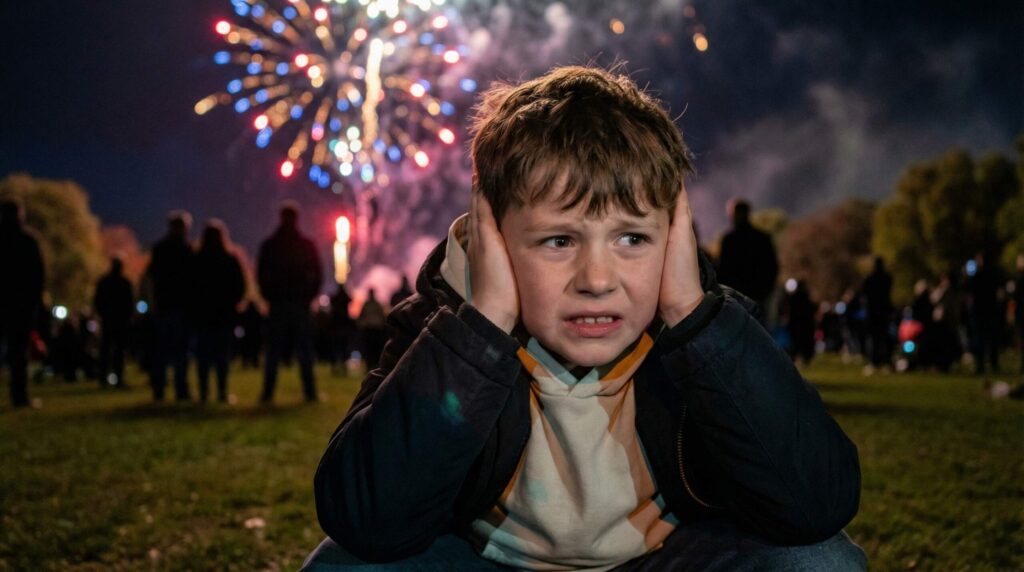
Summer holidays bring fireworks, celebrations, and for many Houston families, significant stress. While we think of anxiety as an emotional response, it has a very real physical impact—especially on children and pets who feel overwhelmed by loud noises. When your child (or your anxious dog) hears a sudden boom, their body’s natural “fight or flight” response kicks in. Muscles tense, the jaw clenches, and the spine can shift into a protective posture. This defensive muscle guarding, repeated over hours or days of fireworks, can leave lasting tension that interferes with comfort and movement.
Anxiety Shows Up in the Body
Anxiety-driven tension manifests in predictable ways. Kids often hold their shoulders up toward their ears, arch their lower backs, or tense their neck muscles. They may clench their jaws so hard they develop headaches. Their breathing becomes shallow and rapid, which only reinforces the tension cycle. These postural changes aren’t just uncomfortable—they can misalign the spine and create pain patterns that linger long after the fireworks stop. The same happens with pets; a dog’s trembling and crouched posture during fireworks is muscular guarding, and that tension can affect their spinal alignment too.
Calming Movement Strategies for Kids
Gentle, intentional movement is one of the best ways to release anxiety-held tension. Here are practical strategies to use during fireworks season:
- Slow, deep breathing with movement: Have your child lie down and practice “belly breathing”—inhaling for a count of four, holding for four, exhaling for six. Pair this with gentle stretches to release the shoulders and neck.
- Gentle yoga or stretching: Child’s pose, cat-cow, and forward folds encourage spinal flexibility and signal to the nervous system that it’s safe to relax.
- Walking or light activity: Movement helps metabolize the stress hormones (cortisol and adrenaline) that build up during anxiety. A calm walk around the neighborhood can work wonders.
- Progressive muscle relaxation: Guide your child to tense and release different muscle groups—hands, arms, shoulders, face—to build awareness of what relaxation feels like.
While movement and breathing are essential, chiropractic care addresses the structural tension that anxiety leaves behind. During fireworks season, the repeated muscle guarding and postural shifts can create vertebral misalignments (subluxations) that persist even after your child feels emotionally calm. Dr. Holmes can identify these areas of tension and misalignment, then use gentle adjustments and soft-tissue work to restore proper spinal alignment and release protective muscle patterns. This is especially valuable for kids, whose growing bodies are sensitive to postural strain and who benefit tremendously from early preventive care.
If your child struggled with fireworks anxiety this year, consider preparing earlier next year. Start incorporating regular stretching and movement practices in late spring. Schedule a check-up with Dr. Holmes to ensure the spine is properly aligned and muscle tension is minimal. This proactive approach means your child’s body enters fireworks season in a resilient, relaxed state rather than a defensive one.
Fireworks season doesn’t have to leave your family with lingering tension and pain. By understanding the mind-body connection, practicing calming movement, and addressing spinal alignment with chiropractic care, you can help your child (and your pet) move through summer celebrations with greater ease and comfort.
Call 713-862-2440 or visit our contact page.