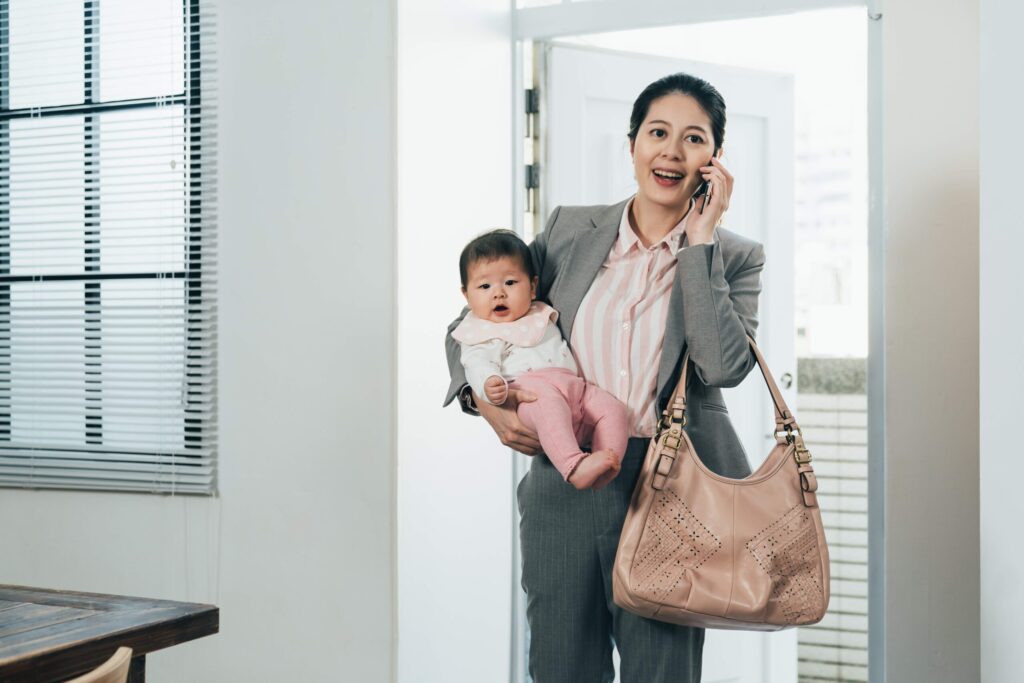
How to Hold Your Child Without Pain
Carrying Your Child Shouldn’t Mean Carrying Pain
If you’re a parent of an infant or toddler, you know that carrying your child is part of the job—sometimes for hours a day. What you may not realize is that the way you carry, hold, and support your child can have a real impact on your neck, shoulders, and lower back. Over time, repetitive carrying in poor positions can create spinal misalignment, muscle strain, and chronic pain that builds slowly until it becomes hard to ignore.
The good news? With awareness and a few practical adjustments, you can carry your child sustainably and protect your spine from unnecessary stress.
Repetitive Carrying Affects Your Spine
Every time you pick up your child and hold them, you’re loading your spine with weight distributed unevenly across your body. If that weight isn’t balanced or if your posture shifts to accommodate the load, your vertebrae and supporting muscles have to work harder to keep you upright. Day after day, month after month, these small postural compromises add up. Your spine may gradually shift out of alignment, muscles become tight and fatigued, and joints begin to compensate for the imbalance.
The most common problem areas for carrying parents are the cervical spine (neck), thoracic spine (mid-back and shoulders), and lumbar spine (lower back). Understanding which carrying methods stress which areas can help you rotate your techniques and distribute the load more evenly.
The Hip Carry: A Staple That Needs Balance
The hip carry is one of the most natural and efficient ways to hold a toddler, but it can create problems if you always favor one side. When you rest your child on your right hip, your right shoulder hikes up, your spine curves to the left, and your right side muscles work overtime to stabilize the weight. Do this for hours every day, and your right side becomes overworked while your left side weakens.
Better approach: Switch hips throughout the day. Make a conscious effort to carry on your left hip as often as your right. This distributes the strain evenly and prevents one-sided muscle imbalance and spinal misalignment.
The Front Carry: Protecting Your Posture
Holding your child in front of your body—cradled in your arms or against your chest—can actually be gentler on your spine than you’d expect, as long as you maintain good posture. The problem comes when parents lean forward to look at their child, round their shoulders, or let their lower back sag to accommodate the weight in front.
Better approach: Keep your shoulders back, engage your core, and let your arms and torso support the weight evenly. Resist the urge to lean forward; instead, bend at your knees when you need to lower yourself to your child’s level. Using a structured baby carrier or wrap can also distribute weight across your body more effectively than cradling alone.
The Back Carry: Strength and Awareness
Carrying your child on your back—whether in a carrier or held securely—can actually promote better spinal alignment because the weight is centered behind your core. However, many parents instinctively lean forward or tense their shoulders, undoing that advantage.
Better approach: Stand tall, keep your chest open, and let your back muscles do the work they’re designed to do. A well-fitted back carrier distributes weight down through your hips and legs, which is much more sustainable than carrying all the load in your shoulders and neck.
Proactive Spinal Care for Carrying Parents
Beyond technique, the most important thing you can do is take a proactive approach to your spinal health. Dr. Holmes helps identify and correct small misalignments before they become painful problems. A chiropractor can assess your carrying posture, suggest adjustments, and work with you to keep your spine mobile and strong.
Stretching your neck, shoulders, and hip flexors daily, strengthening your core, and taking regular breaks from carrying all support your long-term health. You don’t have to live with pain or stiffness—and you shouldn’t have to choose between holding your child and protecting your back.
Carrying your child is one of parenting’s greatest joys. With the right posture, awareness, and preventive care, you can do it pain-free for years to come.
Ready to talk? Call 713-862-2440 or visit our contact page.