The Commute Factor: Houston Traffic and Repetitive Strain Injuries
Why Your Daily Houston Commute Is More Than Just Frustrating
If you spend an hour or more in Houston traffic each day, you’re not just losing time—you’re putting your spine under cumulative stress. Long commutes involve hours of static posture, repetitive steering motions, and the physical tension that comes from navigating busy highways. Over weeks and months, this adds up to measurable spinal strain and muscle fatigue that can lead to pain, stiffness, and long-term postural problems.
Houston’s sprawling geography means many professionals face extended commutes as part of their routine. Whether you’re driving to an office downtown, managing a sales territory across the metro area, or spending your day on the road, the physical toll of repetitive commuting deserves the same attention you’d give any occupational health risk.
How Sitting in Traffic Strains Your Spine
Extended sitting in a car creates several overlapping stressors on your musculoskeletal system:
- Static posture: Your spine holds the same position for extended periods, limiting circulation to discs and vertebrae and causing muscles to fatigue.
- Repetitive steering: Gripping the wheel and making small adjustments engages the same shoulder, arm, and neck muscles hour after hour, leading to cumulative micro-tears and tension knots.
- Bracing for traffic: The mental stress of navigating congestion triggers muscle tension in your neck, shoulders, and lower back—a reflex you may not even notice until pain develops.
- Disc compression: Sitting compresses spinal discs more than standing or moving. Add poor seat support or an awkward steering angle, and that compression increases significantly.
These aren’t acute injuries—they develop gradually, which is why many commuters don’t connect their pain to their driving habits until discomfort becomes unavoidable.
Commuter Wellness Isn’t Optional—It’s Preventive
Like the blog posts we’ve shared about how disc injuries develop over time and why prolonged rest alone doesn’t solve chronic strain, commute-related tension follows a predictable pattern. The good news is that recognizing the pattern early means you can intervene before pain limits your work and life.
A proactive commuter wellness strategy includes:
- Spinal assessment: Understanding your current posture, alignment, and any early signs of disc stress or muscle imbalance.
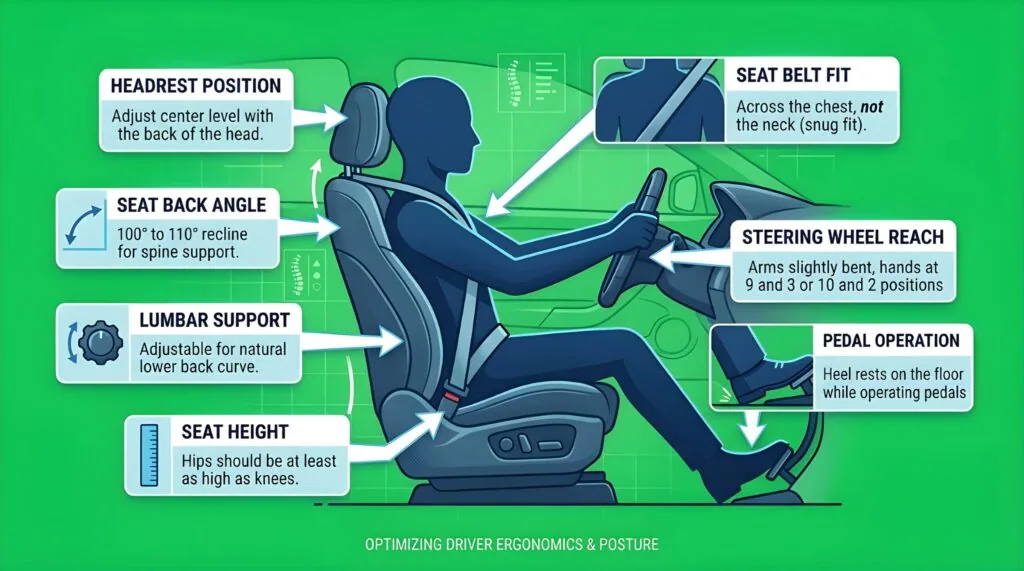
- Ergonomic seat adjustments: Small changes to steering wheel height, seat angle, and lumbar support can dramatically reduce strain over hours of driving.
- Stretching and mobility breaks: Even brief pauses at red lights or rest stops matter. Simple neck rolls, shoulder shrugs, and spinal twists interrupt static tension.
- Regular chiropractic care: Periodic adjustments address accumulated misalignments before they become symptomatic, keeping your spine mobile and your nervous system clear.
Your Commute Doesn’t Have to Be a Health Risk
Many Houston professionals assume neck stiffness, lower back ache, or shoulder tension are just part of the job. They aren’t. These symptoms are signals that your spine is working harder than it should be, and they respond well to chiropractic assessment and care.
If you’re spending 5, 10, or more hours per week in your car, your body deserves a wellness plan tailored to that demand. A chiropractic evaluation can identify where your spine is bearing extra load, where muscles are chronically tight, and what adjustments—both to your car setup and your spinal care routine—will make the biggest difference.
Your commute is non-negotiable; your health strategy shouldn’t be either. Schedule an appointment to discuss how chiropractic care can support your long-term vitality, even—or especially—if your job means hours behind the wheel.
Click here to contact Dr. Holmes or call 713-862-2440